Latest Tech Gadets that you can buy.

At this point, we are about two steps away from becoming cyborgs. Once we can upload our consciousnesses to the cloud and get rid of our pesky bodily functions, we’ll be there: fully integrated with technology. In the meantime, it seems we’re getting closer every day. At the massive CES electronics convention in Las Vegas at the beginning of the year, a gathering of elite brands showed off their best new tech, trying to win us over with products we immediately wanted to buy and put in our houses and on our bodies. And as the year’s moved on, more new stuff has been teased and released. Fortunately, you can purchase most of these goods right now. Unfortunately, some of them will cost you serious money. But not all of them.

Whether you want cool new wearable tech or an impressive new-age television for your living room, 2019 has produced something you’ll really covet. These are the 15 new gadgets that we hope will make life more electronically engaging—and easier, too.
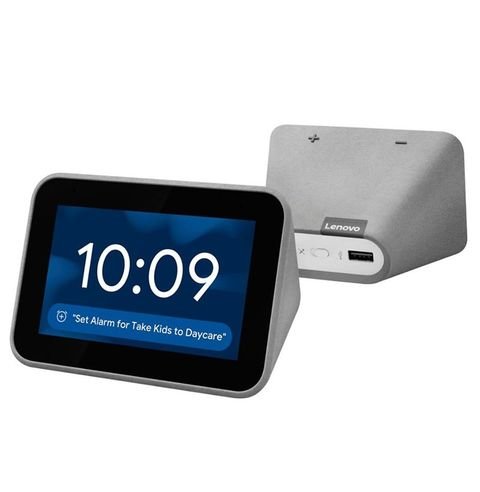
Lenovo Smart Clock with Google Assistant
bestbuy.com

$39.99

We’re no strangers to interactive screens in the home, between Facebook Portals and Amazon Echos and Google Hubs. The beauty of Lenovo’s new Smart Clock, then, is its simplicity. It won’t video conference or stream TV, but it covers all the bedside bases: It tells times, charges phones, and gently wakes you up with a clock face that gradually brightens before your alarm goes off. By connecting it to Google Assistant, you can instruct it to do a whole lot more. Small and stylish with its heather gray case, it’s an unobtrusive and helpful addition.
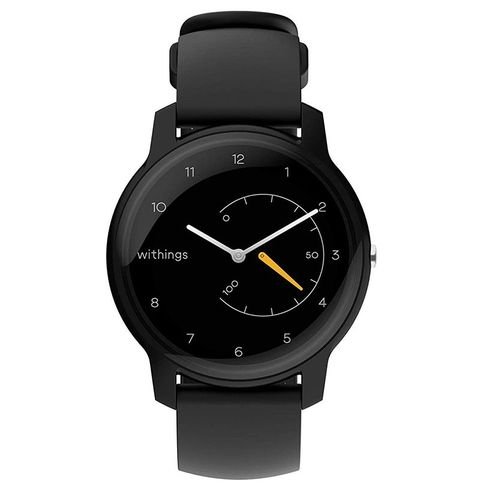
Withings Move Activity and Sleep Watch
withings.com

$69.95

Withings Move, the new smartwatch from Withings for 2019, monitors your activity and your sleep. It has a GPS tracker and syncs with the Health Mate app. It only costs $69.95. Most impressively, it works for 18 months without requiring a battery charge. That, and its understated design with an analog clock face, makes it more timeless than a lot of trackers on the market. The customization options are plentiful too, so you can easily get it to fit your look.

Mophie Juice Pack Access
amazon.com

$99.95

$71.41 (29% off)

This is one of the most practical gadgets to come out this year: a portable charging case for Apple iPhones that doesn’t use or cover up the Lightning port. Meaning, you can charge your phone while listening to wired headphones. Mophie’s Juice Pack Access gets its power from any Qi wireless charging pad or its included charging cable, giving you up to 31 hours of battery life. And despite its rather sleek design, it’s strong enough to protect your phone. It fits Xs Max, Xs/X, and XR iPhones.

indiegogo.com

$109.00

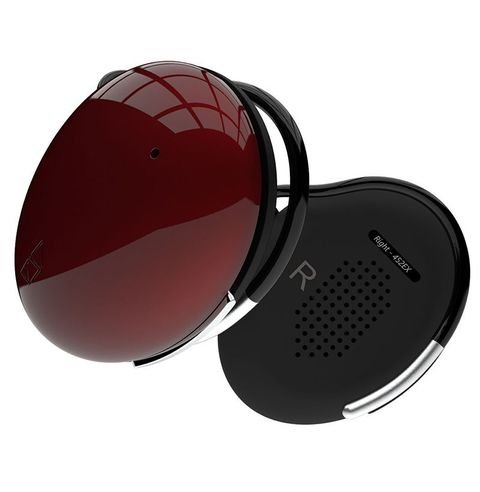
Waverly Ambassador Translator

Price=109$

Many of us have the misfortune of being cursed with monolingualism. Blame the public school system in America. But for those who want to travel regardless of language boundaries—or easily converse with people who speak different languages in their own neighborhood—Waverly Labs invented an audio device that translates on the spot. There are many situations in which to use it, but perhaps the most useful setup is to attach one to your ear, hand the other to someone who doesn’t speak the same language to strap onto their own head, and talk away. The correct translation will play in both of your ears. The technology is still in the Indiegogo stage, but it might be worth it to you to get your hands on an early version.

Ember 14 oz. Temperature Control Mug

$129.95

$103.99 (20% off)

This mug is a godsend to people who can’t function without morning coffee (as in, a large segment of the population). All it does is use internal heating technology to keep your caffeinated beverage hot—for an hour. You can nurse coffee without repeated trips to the microwave, or steep tea to the ideal temperature (all controlled via a Bluetooth-connected app). And that’s all it needs to do. While Ember debuted these mugs awhile back, the 14-ounce version is new to 2019, and extremely helpful to your morning routine.
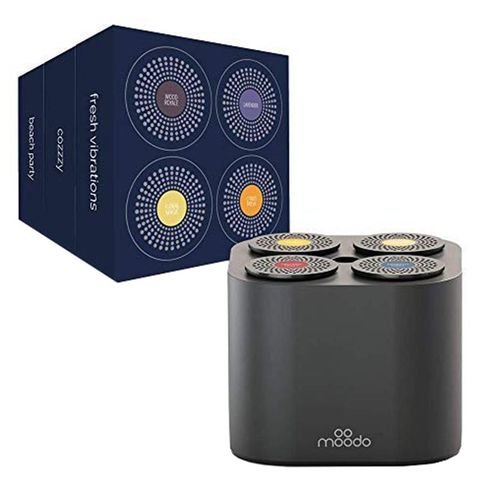
Moodo Smart Diffuser Bundle
amazon.com

$149.99

Moodo makes aroma diffusers for the home that can be personalized thanks to four interchangeable scent capsules and smart technology you can control from afar; this diffuser has been around for more than a year. Now, Moodo has introduced the MoodoGo device, which is easy to cart around because it’s tiny. All you need is a USB power supply for it to start dispensing good smells. The MoodoGo only holds one scent capsule, but it’s a perfect fit for car cupholders and cramped desk spaces. You can’t pre-order it yet, but you can sign up for updates on the Moodo website. In the meantime, the OG Moodo diffuser (pictured) might tide you over with a variety of scent packs to choose from.
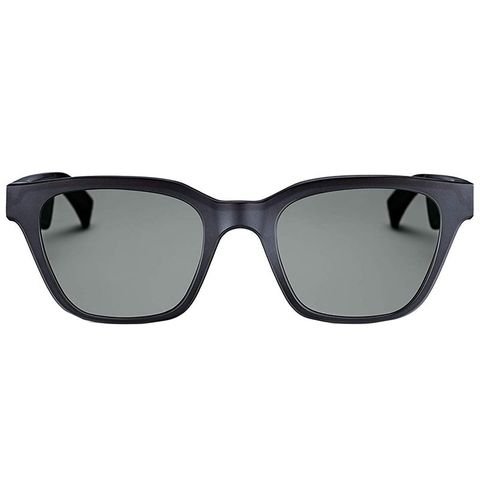
Bose Frames Audio Sunglasses
amazon.com

$199.00

Bose debuted an audio gadget this year that combined two things you love dearly into one: cool sunglasses and wireless earbuds. If you throw a pair of these Bose Frames on during a sunny day spent outside, the frames themselves will play music, streamed from your phone via a Bluetooth connection, exclusively for your ears. We promise, no one else will be able to hear your music playing. The speakers are that good. If you don’t love this frame shape, check out the Rondo style, with rounded edges.

Nanoleaf Modular Light Panels
nanoleaf.me

$199.99

For a futuristic kind of home decor, take a look at these customizable light panels from Nanoleaf. Connect a string of them into whatever design you’d like on your wall, then control them from the app. The color options are vast, as are the modes—set the light panels to react to your music playlist, assist with your concentration, or mimic a rising sun in the morning to wake you up. You can buy triangular panels now, but if you wait until the end of the year, Nanoleaf is adding hexagonal panels as well.

GilletteLabs Heated Razor Starter Kit
gillette.com

$200.00

Gillette’s innovation branch debuted this heated razor with an Indiegogo campaign last year, and it was wildly popular—probably because a razor that mimics the barbershop treatment sounds pretty nice. In less than a second, the razor heats up to 122 degrees, warming soap and skin for an upgraded shave. Gillette Heated Razors ordered during the Indiegogo campaign have already shipped, and Gillette now has a commercial version available. You can also sign up for automatic blade refills for however often you think you’ll need ’em.
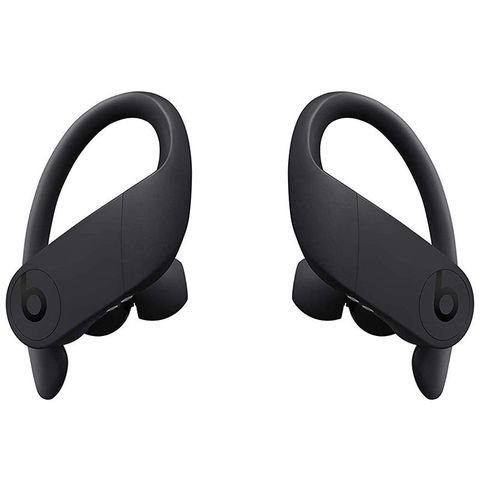
Beats Powerbeats Pro Totally Wireless Earphones
amazon.com

$249.95

$199.95 (20% off)

The market is crowded with wireless sport headphones, but this is a pair worth noting. Released this spring, Beats’ Powerbeats Pro earbuds combine clear audio with workout-worthy durability. The battery life is extremely nice, and the controls are seamless. As in, when you put them on, they automatically start playing wherever your music or podcast last let off. And they come with a charging case to take with.

Nreal Light Mixed Reality Glasses

nreal.ai
$499.00

Mixed reality glasses can be used to take what you’re seeing of the real world and overlay it with virtual content. At CES 2019, Nreal, a Chinese start-up, showed off a pair that almost looks like normal glasses you could wear on the street. Hey, it’s a step in the right direction. Nreal’s ready-to-wear Light glasses are designed to give wearers an immersive experience with spatial sound, voice control, and a widescreen display at 1080p—without the bulky headset. If you’re into mixing realities, it looks like you’ll have to wait until spring 2020 for the consumer version to go up for sale. However, a Developer Kit ($1,199) will be available in September.

KitchenAid Cook Processor Connect

kitchenaid.com

KitchenAid gave U.S. consumers a new kitchen counter appliance to lust after this year: the Cook Processor Connect, a do-it-all machine that automatically stirs veggies as they sauté, chops ingredients to your preferred size, kneads dough, steams food, measures weight, and more. It also comes programmed with 100 recipes with step-by-step instructions accessed through an app. It’s like an Instant Pot, but pretty (and expensive). Release date and price were not announced, but expect it to cost well over $1,000.

Samsung 55″ The Frame QLED Smart 4K UHD TV
amazon.com

$1,097.99

Samsung updated its Frame TV to QLED quality for 2019. When you aren’t watching TV, the Frame displays high-def paintings and pictures so that wall space isn’t wasted. It’s definitely a classy take on a 4K TV-watching experience.

This year, Samsung also beefed up its QLED 8K line to include 65-, 75-, and 82-inch screens, which you can shop now if you have a bundle of cash to blow.

LG Signature OLED TV R9

This television rolls up. Seriously. LG is coming out with a new, disappearing OLED TV, with a screen that can stretch to 65 inches and then roll back into a compact box, with a launch date for the second half of 2019. There’s no price yet, but you’ll get a 4K HDR Smart TV-watching experience like none before it, with Google Assistant and Alexa. That, plus a decluttered view when you don’t want a screen hogging your living space.

Harley-Davidson LiveWire Motorcycle
harley-davidson.com

Harley-Davidson made waves last year when it previewed its all-electric motorcycle, called the LiveWire. Harley gave us a delivery date and price, too: August 2019, starting at $29,799. The LiveWire targets a new demographic of motorcycle riders, one that appreciates a quiet machine for urban street riding that runs clean. It isn’t manual either, meaning no clutch or gear-shifting to accelerate. This is the first in a new generation of bikes meant to get young folks excited about motorcycles again.


Thank you hope you like it.

Role of Python in Data Science

Python is open source, interpreted, high level language and provides great approach for object-oriented programming. It is one of the best language used by data scientist for various data science projects/application. Python provide great functionality to deal with mathematics, statistics and scientific function. It provides great libraries to deals with data science application.

One of the main reasons why Python is widely used in the scientific and research communities is because of its ease of use and simple syntax which makes it easy to adapt for people who do not have an engineering background. It is also more suited for quick prototyping.

According to engineers coming from academia and industry, deep learning frameworks available with Python APIs, in addition to the scientific packages have made Python incredibly productive and versatile. There has been a lot of evolution in deep learning Python frameworks and it’s rapidly upgrading.

In terms of application areas, ML scientists prefer Python as well. When it comes to areas like building fraud detection algorithms and network security, developers leaned towards Java, while for applications like natural language processing (NLP) and sentiment analysis, developers opted for Python, because it provides large collection of libraries that help to solve complex business problem easily, build strong system and data application.

Following are some useful features of Python language:

  • It uses the elegant syntax, hence the programs are easier to read.
  • It is a simple to access language, which makes it easy to achieve the program working.
  • The large standard library and community support.
  • The interactive mode of Python makes its simple to test codes.
  • In Python, it is also simple to extend the code by appending new modules that are implemented in other compiled language like C++ or C.
  • Python is an expressive language which is possible to embed into applications to offer a programmable interface.
  • Allows developer to run the code anywhere, including Windows, Mac OS X, UNIX, and Linux.
  • It is free software in a couple of categories. It does not cost anything to use or download Pythons or to add it to the application.

Most Commonly used libraries for data science :

  • Numpy: Numpy is Python library that provides mathematical function to handle large dimension array. It provides various method/function for Array, Metrics, and linear algebra.
    NumPy stands for Numerical Python. It provides lots of useful features for operations on n-arrays and matrices in Python. The library provides vectorization of mathematical operations on the NumPy array type, which enhance performance and speeds up the execution. It’s very easy to work with large multidimensional arrays and matrices using NumPy.
  • Pandas: Pandas is one of the most popular Python library for data manipulation and analysis. Pandas provide useful functions to manipulate large amount of structured data. Pandas provide easiest method to perform analysis. It provide large data structures and manipulating numerical tables and time series data. Pandas is a perfect tool for data wrangling. Pandas is designed for quick and easy data manipulation, aggregation, and visualization. There two data structures in Pandas –
    Series – It Handle and store data in one-dimensional data.
    DataFrame – It Handle and store Two dimensional data.
  • Matplotlib: Matplolib is another useful Python library for Data Visualization. Descriptive analysis and visualizing data is very important for any organization. Matplotlib provides various method to Visualize data in more effective way. Matplotlib allows to quickly make line graphs, pie charts, histograms, and other professional grade figures. Using Matplotlib, one can customize every aspect of a figure. Matplotlib has interactive features like zooming and planning and saving the Graph in graphics format.
  • Scipy: Scipy is another popular Python library for data science and scientific computing. Scipy provides great functionality to scientific mathematics and computing programming. SciPy contains sub-modules for optimization, linear algebra, integration, interpolation, special functions, FFT, signal and image processing, ODE solvers, Statmodel and other tasks common in science and engineering.
  • Scikit – learn: Sklearn is Python library for machine learning. Sklearn provides various algorithms and functions that are used in machine learning. Sklearn is built on NumPy, SciPy, and matplotlib. Sklearn provides easy and simple tools for data mining and data analysis. It provides a set of common machine learning algorithms to users through a consistent interface. Scikit-Learn helps to quickly implement popular algorithms on datasets and solve real-world problems.

Thanks for reading my blog pls share my blog and hit like if you like it,don’t forget to follow me.

You can write a comment if you want any new blog or you can also suggest a good topic for a blog.

Thank you.

Hope you liked it.

Greed is a Curse.

ONCE upon a time, long, long ago, there were two friends Jamil and Qasim. They were famous carpet merchants and used to sell exquisite carpets and rugs. They were known far and wide for their high quality merchandise and were very well respected.

Once there was a fair in another city and the two friends took cartloads of carpets to be sold there. They earned a very fat profit and were extremely happy. On their return journey, they sent their caravan and servants back by a longer and safer route and decided to take a shortcut so that they could reach their homes quickly and be with their families again.

As they were passing through a forest, dark clouds covered the sky and it started raining heavily. The two friends took refuge in a woodcutter’s cottage that they came across. The cottage was deserted and in a quite derelict condition but at least it was dry and they were out of the rain. The two friends made themselves as comfortable as they could and shared a meal. Then they took out the heavy leather bags containing their money. The pile of gold coins glittered on the floor as they counted the money again and again.

The two friends talked for a while, making plans for new ventures till Jamil fell asleep. Qasim looked at the piles of gold coins and soon greed and evil thoughts entered his mind.ARTICLE CONTINUES AFTER AD

“Why should I keep sharing my wealth with him?” he asked himself. “Everyone knows I am a better craftsman than him and a shrewder businessman. I don’t need him. But if we split, he might set up his own business and compete with me. It will be better if he is no longer alive.”

Overcome by greed and avarice, he quietly took out his dagger and stabbed Jamil as he lay asleep.

Thinking quickly, Qasim buried the leather pouches in a corner. He rubbed mud all over his clothes and face and ran out in the rain. He reached the town and raised quite a hue and cry.

“Robbed! We were robbed by bandits in the forest,” he cried. “They took away our money and killed Jamil. I saved myself with great difficulty.”

All the people gathered around him, shaking their heads in sympathy.

The elders of the town took a few guards with them and brought back Jamil’s dead body and their horses. Everybody believed Qasim’s story and no one suspected him of any foul deeds.

Meanwhile, Qasim continued his business alone and flourished. After a few months, he considered it safe to return to the cottage to retrieve his buried wealth. One evening, he quietly went away on his horse towards the forest.

Strangely enough, it began to rain again. Qasim found the cottage with great difficulty. Once he reached there, he dismounted from his horse and carefully began to make his way towards the old hut. Suddenly, he heard a great screeching sound and looked back. He was horrified to see an old weather-beaten tree being uprooted and toppled by strong gusts of wind. He tried to run away but the mud made him slow. The great tree fell on him and that was the end of the greedy carpet-seller.

A few days later, a great hunt was launched for the missing merchant. He was finally found and everyone was amazed that the two friends had died at the same spot. Qasim was buried near Jamil but their money still lies buried in a corner of the old woodcutter’s cottage. No one has ever found it and no one probably would!

A wise person once said that there is sufficient in the world for man’s every need but not for man’s greed and I agree with him. What about you?

Things to know about a(Data Scientist).

MASTER’S IN DATA SCIENCE

What is a Data Scientist
Data scientists are big data wranglers, gathering and analyzing large sets of structured and unstructured data. A data scientist’s role combines computer science, statistics, and mathematics. They analyze, process, and model data then interpret the results to create actionable plans for companies and other organizations.
Data scientists are analytical experts who utilize their skills in both technology and social science to find trends and manage data. They use industry knowledge, contextual understanding, skepticism of existing assumptions – to uncover solutions to business challenges.
A data scientist’s work typically involves making sense of messy, unstructured data, from sources such as smart devices, social media feeds, and emails that don’t neatly fit into a database.
Technical skills are not the only thing that matters, however. Data scientists often exist in business settings and are charged with communicating complex ideas and making data-driven organizational decisions. As a result, it is highly important for them to be effective communicators, leaders and team members as well as high-level analytical thinkers.
Experienced data scientists and data managers typically have over ten years of experience and are tasked with developing a company’s best practices, from cleaning to processing and storing data. They work cross functionally with other teams throughout their organization, such as marketing, customer success, and operations. They are highly sought after in today’s data and tech heavy economy, and their salaries and job growth clearly reflect that.
Steps to Become a Data Scientist
Here are six steps to consider if you’re interested in pursuing a career in data science:

  1. Pursue an undergraduate degree in data science or a closely related field
  2. Learn required skills to become a data scientist
  3. Consider a specialization
  4. Get your first entry-level data scientist job
  5. Review additional data scientist certifications and post-graduate learning
  6. Earn a master’s degree in data science
    How to Become a Data Scientist in 2019
  7. Pursue an undergraduate degree in data science or a closely related field
    You will need at least a bachelor’s degree in data science, mathematics, statistics, computer science to get your foot in the door as an entry level data scientist. Degrees also add structure, internships, networking and recognized academic qualifications for your résumé. However, if you’ve received a bachelor’s degree in a different field, you may need to focus on developing skills needed for the job through online short courses or bootcamps.
  8. Learn the required skills to become a data scientist
    • Programming
    • Machine Learning techniques
    • Data Visualization and Reporting
    • Risk Analysis
    • Statistical analysis and Math
    • Effective Communication
    • Software Engineering Skills
    • Data Mining, Cleaning and Munging
    • Research
    • Big Data Platforms
    • Cloud Tools
    • Data warehousing and structures
    This list is always subject to change. As Anmol Rajpurohit suggests in his guide to becoming a data scientist, “generic programming skills are a lot more important than being the expert of any particular programming language.
  9. Consider a specialization
    In demand data scientists typically specialize in a particular industry or develop strong skills in areas such as artificial intelligence, machine learning, research, or database management. Specialization is a good way to increase your earning potential and do work that is meaningful to you. According to the Burtchworks Study, entry data scientists working in the tech industry earn an average salary of $85,143 and senior data scientists working for consulting firms earn an average salary of $158,462.
    Get your first entry level job as a data scientist
    Once you’ve acquired the right skills and/or specialization, you should be ready for your first data science role! It may be useful to create an online portfolio to display a few projects and showcase your accomplishments to potential employers. You also may want to consider a company where there’s room for growth since your first data science job may not have the title data scientist, but could be more of an analytical role. You’ll quickly learn how to work on a team and best practices that will prepare you for more senior positions.
    Review additional data scientist certifications and post-graduate learning
    Here are a few certifications that focus on useful skills:
    Certified Analytics Professional (CAP)
    CAP was created by the Institute for Operations Research and the Management Sciences (INFORMS) and is targeted towards data scientists. During the certification exam, candidates must demonstrate their expertise of the end-to-end analytics process. This includes the framing of business and analytics problems, data and methodology, model building, deployment and life cycle management.
    SAS Certified Predictive Modeler using SAS Enterprise Miner 14
    This certification is designed for SAS Enterprise Miner users who perform predictive analytics. Candidates must have a deep, practical understanding of the functionalities for predictive modeling available in SAS Enterprise Miner 14.
    Earn a master’s degree in data science
    Academic qualifications may be more important than you imagine. When it comes to most data science jobs, is a master’s required? It depends on the job and some working data scientists have a bachelor’s or have graduated from a data science bootcamp. However, as Burtchworks notes, data scientists typically have a graduate or advanced degree in a quantitative discipline. The Burtch Works study also shares that most data scientists have an advanced degree, either a master’s or Ph.D.
    Data Scientist Responsibilities
    “A data scientist is someone who is better at statistics than any software engineer and better at software engineering than any statistician”. – Josh Wills on the difference between data scientists and statisticians
    On any given day, a data scientist’s responsibilities may include:
    • Solving business problems through undirected research and framing open-ended industry questions
    • Extract huge volumes of structured and unstructured data. They query structured data from relational databases using programming languages such as SQL. They gather unstructured data through web scraping, APIs, and surveys.
    • Employ sophisticated analytical methods, machine learning and statistical methods to prepare data for use in predictive and prescriptive modeling
    • Thoroughly clean data to discard irrelevant information and prepare the data for preprocessing and modeling
    • Perform exploratory data analysis (EDA) to determine how to handle missing data and to look for trends and/or opportunities
    • Discovering new algorithms to solve problems and build programs to automate repetitive work
    • Communicate predictions and findings to management and IT departments through effective data visualizations and reports
    • Recommend cost-effective changes to existing procedures and strategies
    Every company will have a different take on data science job tasks. Some treat their data scientists as data analysts or combine their duties with data engineers; others need top-level analytics experts skilled in intense machine learning and data visualizations.
    As data scientists achieve new levels of experience or change jobs, their responsibilities invariably change. For example, a person working alone in a mid-size company may spend a good portion of the day in data cleaning and munging. A high-level employee in a business that offers data-based services may be asked to structure big data projects or create new products.
    Characteristics of a Successful Data Scientist Professional
    Data scientists don’t need to just understand programming languages, management of databases and how to transpose data into visualizations – they should be naturally curious about their surrounding world, but through an analytical lens. Possessing personality traits that resemble quality assurance departments, data scientists may be meticulous as they review large amounts of data and seek out patterns and answers. They are also creative in making new algorithms to crawl data or devising organized database warehouses.
    Generally, professionals in the data science field must know how to communicate in several different modes, i.e to their team, stakeholders and clients. There may be a lot of dead ends, wrong turns, or bumpy roads, but data scientists should possess drive and grit to stay afloat with patience in their research.
    “Successful data scientists have a strong technical background, but the best data scientists also have great intuition about data. Are the features meaningful, and do they reflect what you think they should mean? Given the way your data is distributed, which model should you be using? What does it mean if a value is missing, and what should you do with it? The best data scientists are also great at communicating, both to other data scientists and non-technical people. In order to be effective at Airbnb, our analyses have to be both technically rigorous and presented in a clear and actionable way to other members of the company.”
    –Lisa Qian, Data Scientist at Airbnb
    Required Skills for a Data Scientist
    Programming: Python, SQL, Scala, Java, R, MATLAB

Machine Learning: Natural Language Processing, Classification, Clustering,
Ensemble methods, Deep Learning

Data Visualization: Tableau, SAS, D3.js, Python, Java, R libraries

Big data platforms: MongoDB, Oracle, Microsoft Azure, Cloudera
Data Science Job Outlook
According to the Bureau of Labor and Statistics (BLS), employment growth of computer information and research scientists by 2028 is 16%, over three times faster than the national average. Demand for experienced data scientists is high, but you have to start somewhere. Some data scientists get their foot in the door working as entry-level data analysts, extracting structured data from MySQL databases or CRM systems, developing basic visualizations in Tableau or analyzing A/B test results. If you’d like to push beyond your analytical role – think about what you could do with a career in data science:
• Data/Big Data Engineer
• Data/Big Data Architect
Companies of every size and industry – from Google, LinkedIn and Amazon to the humble retail store – are looking for experts to help them wrestle big data into submission. There are many different types of data scientist jobs, but even as demand for data engineers surges, job postings for big data experts are expected to remain high. In certain companies, “new look” data scientists may find themselves responsible for financial planning, ROI assessment, budgets and a host of other duties related to the management of an organization.
Data Scientist Salary
A data scientist’s salary depends on years of experience, skillset, education, and location. According to The Burtchworks Study, employers place greater value on data scientists with specialized skills, such as Natural Language Processing or Artificial Intelligence. West coast Data scientists earn the highest average salary and entry level data scientists can expect to earn at least $90,000. The BLS claims skilled computer research and information scientists, which include data scientists, enjoy excellent job prospects because of high demand.
Data Scientist
Average Data Scientist Salary: $118,370 per year
Lowest 10%: $69,230
Highest 10%: $183,820
Senior Data Scientist
Median Sr. Data Scientist Salary: $171,755
Total Pay Range: $147,000 – $200,000

Data Scientist (sexiest job of the century)

Data science is a multi-disciplinary field that uses scientific methods, processes, algorithms and systems to extract knowledge and insights from structured and unstructured data.[1][2] Data science is related to data mining and big data.

Data science is a “concept to unify statisticsdata analysismachine learning and their related methods” in order to “understand and analyze actual phenomena” with data.[3] It employs techniques and theories drawn from many fields within the context of mathematicsstatisticscomputer science, and information scienceTuring award winner Jim Gray imagined data science as a “fourth paradigm” of science (empiricaltheoreticalcomputational and now data-driven) and asserted that “everything about science is changing because of the impact of information technology” and the data deluge.[4][5] In 2015, the American Statistical Association identified database management, statistics and machine learning, and distributed and parallel systems as the three emerging foundational professional communities.[6]

Cloud computing.

Cloud computing was popularized with Amazon.com releasing its Elastic Compute Cloud product in 2006.[11]

References to the phrase “cloud computing” appeared as early as 1996, with the first known mention in a Compaq internal document.[12]

The cloud symbol was used to represent networks of computing equipment in the original ARPANET by as early as 1977,[13] and the CSNET by 1981[14]—both predecessors to the Internet itself. The word cloud was used as a metaphor for the Internet and a standardized cloud-like shape was used to denote a network on telephony schematics. With this simplification, the implication is that the specifics of how the end points of a network are connected are not relevant for the purposes of understanding it.